Understanding the Czech Jewish Narrative and Kafka

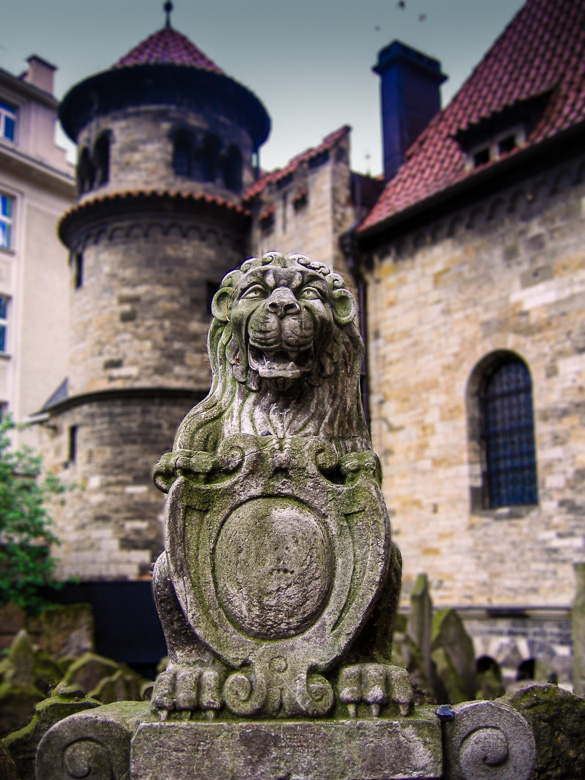
old jewish cemetery in Prague

Please join our free virtual (Zoom) lecture on Wednesday, January 19, 2022 

Time:  7:00pm – 8:30pm

Presenter: Irene Shaland

This event is hosted by New City Library, NY

This free and open to the public program will take place online, but registration is required.

To Register and for the Zoom information follow the link below:

https://newcity.librarycalendar.com/events/understanding-czech-jewish-narrative-and-kafka

The history of the Jews in the Czech lands, which included the modern Czech Republic as well as Bohemia, Czech Silesia, and Moravia, goes back more than a thousand years. Jews are believed to have settled in Prague in the 10th century. By the end of the 19th century, most Czech Jews within the Austro-Hungarian Empire lived in large cities, spoke German, and considered themselves Germans.

In this presentation, we will explore the fascinating and little-studied phenomenon: the formation of the complex and fluid Jewish/non-Jewish sense of identity by peering into the mind of the greatest European modernist writer, Franz Kafka (1883-1924).  

Kafka was born and raised as a Jew and lived all his life in Prague. We will focus our exploration on Kafka in Prague and Prague in Kafka’s writing, even though, in his works we find no direct reference to Judaism or to the specific places of Prague or  Bohemia. However, Kafka took a keen interest in- and learned- Yiddish and Hebrew, and his diaries and letters reveal a repeated reflection on his identity as a Jew and on European Jewish life. He also anticipated the incoming Holocaust of the European Jewry.

Seeking Kafka in Prague and Prague in Kafka, we will attempt to understand the Jewish Czech narrative through reconciling this contradiction: strong Jewish and East European interest in life and lack of explicit reference to these interests in the great author’s literary work. If Kafka had not been born and raised as a Jew, would he become Kafka?

CLICK HERE TO REGISTER

Review of Jewish Guide to Malta and Corsica

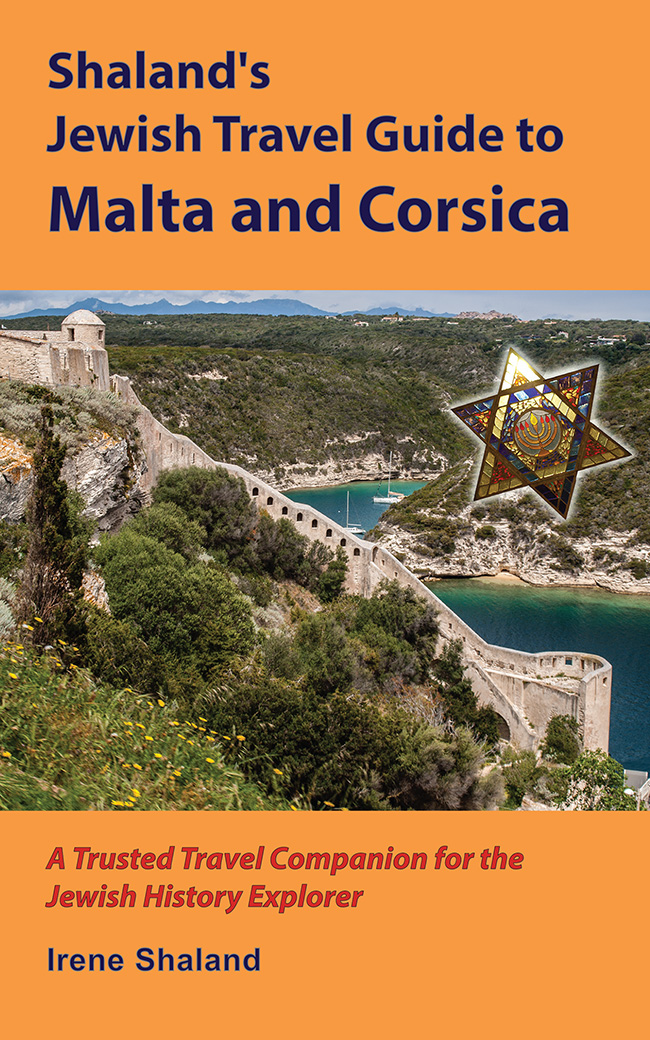
Book cover of Shaland's Jewish Travel Guide to Malta and Corsica

By Barbara Miller, the author of “If I Survive: Nazi Germany and the Jews.”

This book is a masterpiece in bringing to light the unknown history and rich cultural treasures of Malta and Corsica which are situated in the beautiful Mediterranean Sea but off the beaten track for most tourists. Author Irene Shaland’s experience as an art and travel writer, educator, and theatre reviewer brings a richness and depth not normally found in travel guides. Her husband, Alex, an internationally-acclaimed photographer has contributed a huge number of amazing photos that bring the story to life.

And this is much more than a travel guide. It also opens the door on the Jewish story of Malta and Corsica. As Jewish migrants from Russia to the USA, they bring unique insights to this travel guide. 

Many gems of information for the curious are revealed like the first alphabet, the temples built well before the pyramids of Egypt, and much more but you need to read it to find out. You will be surprised at how pivotal these two small islands were in the history of Europe and the Middle East. When you pick this book up, you’ll not be able to put it down. Even if you don’t plan to travel there, you’ll be carried along as Irene’s skills as a detective and researcher draw you into this amazing story. 

If your Amazon account is in the US (www.amazon.com), please follow one of the links below to take a look at the paperback or eBook edition of Irene’s book:

Paperback edition: https://amzn.to/3nfjH9s

eBook (Kindle) edition:  https://amzn.to/3uJRTeQ

If you live outside of the US and your Amazon account is based in your country, please go to your Amazon account and type “Shaland’s Jewish Travel Guide to Malta and Corsica” in the search box.

Learn more about Irene Shaland.

travel literature, travel nonfiction, travel stories books, ultimate travel list, travel the world book, guide book, guide book europe, guide book of, jewish authors, jewish places, jewish sites, best sellers wwii jewish biography, jewish women authors.

Jews of the Jungles (and cities) in Brazil

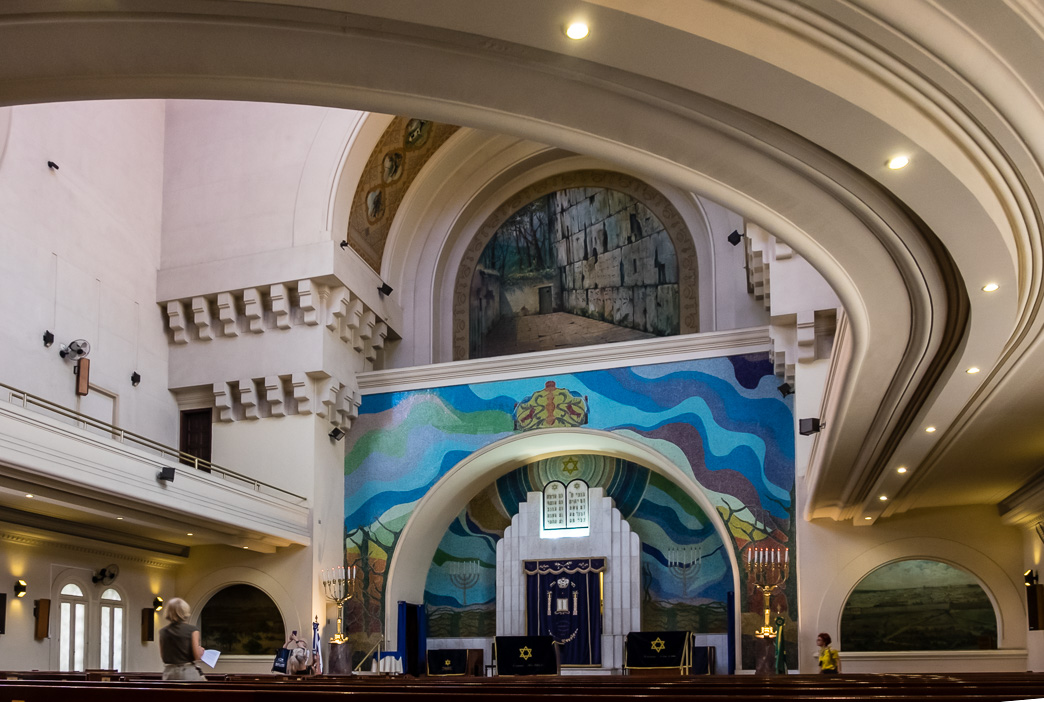
Interior of Grand Temple, Rio de Janeiro

Irene Shaland’s Virtual Lecture

Thursday                     December 16th           2021                              7:30 PM

This virtual presentation is hosted by Adath Shalom Synagogue, Morris Plains, NJ.

Join Irene Shaland, a Jewish historian, internationally-published art and travel writer, and author of five books for a captivating journey through 500 years of Jewish history in Brazil. Encounter little-known stories of Brazil discovery in the 15th century’s context of a twisted world of politics, deceptions, and intrigues. Learn about the key role the  Crypto-Jews played in this country’s exploration and development. Find out why Anna Novinsky, a renowned expert in Jewish history in Sao Paolo, claimed that “Brazil was built by the Jews!”

Journey from the 15th to the 21st century of Brazilian history and visit Salvador Bahia, Manaus, the Amazon, Brasilia, Rio de Janeiro, and the Iguassu Falls to uncover fascinating Jewish narratives of this unique country and to meet the Brazilian Jews who dwell in its cities and in the jungle.

To attend, click on the “Zoom Link” 10 minutes prior to the event on the Adath Shalom site:

https://www.adathshalom.net/event/jews-of-the-jungle-travels-to-brazil-with-irene-shaland.html


Check out our Lecture Schedule.

Dani Rotstein Talks about Jewish Majorca

Logo of Jewish Majorca company

The following text and images were provided by Dani Rotstein, Founder & Owner of a unique cultural tourism company called Jewish Majorca.

“Let me tell you about an exciting educational resource that is innovative and useful for Jewish communities around the globe!

Jewish Majorca is a cultural tourism company that provides educational tours of the island exploring the deep-rooted Jewish history. They’ve pivoted to offer virtual tours and experiences for people of all ages! This video best describes what they do and how they do it. 

Its founder, Dani Rotstein, is originally from New Jersey but fell in love with Spain when he spent his junior year of college studying in Madrid. Upon moving to Mallorca, he learned of the taboo history of the island’s descendants of Jewish Conversos – named “Chuetas.” He has since made it his life’s mission to educate about the topic and bring other diverse Jewish stories from around the world into the homes of interested Jewish community enthusiasts.

Below is an outline of some of the programs they offer:

Live Zoom Walking tours  where Dani actually walks through the streets of Palma with you as if he were giving you an in-person tour of the city and supplemented with some beautiful pre-recorded content of previous tours. It’s a truly unique experience. The live experience is available during daylight in Spain. If you should need a later time, he can also do a version of the tour from his home office. Dani is a fantastically enticing guide and the content is enthralling. These tours are generally broken into four parts. They can be booked as a complete package or in any combination. 

You can find all the many different virtual programs on their website. 

https://www.jewishmajorca.com/live-zoom-tours/

Feel free to contact Dani as well as Mariano Valdes, who’s managing the program booking. If this is something you’d be interested in for your congregants or community members, feel free to work with them directly! 
Thank you! 
Team Jewish Majorca”

Disclaimer: Global Travel Authors and its members are not affiliated with Jewish Majorca and have no financial interest in sharing the above information. We believe that Jewish Majorca could be a valuable resource for in-person and virtual travelers interested in Jewish history. GTA Team.

Irene Shaland’s Upcoming October 2021 Lectures

images of lecture add


In October, Irene Shaland will be presenting two lectures for you to choose from or – to attend both!

1st Lecture Date: October 14th

Time: 4:30 EST.

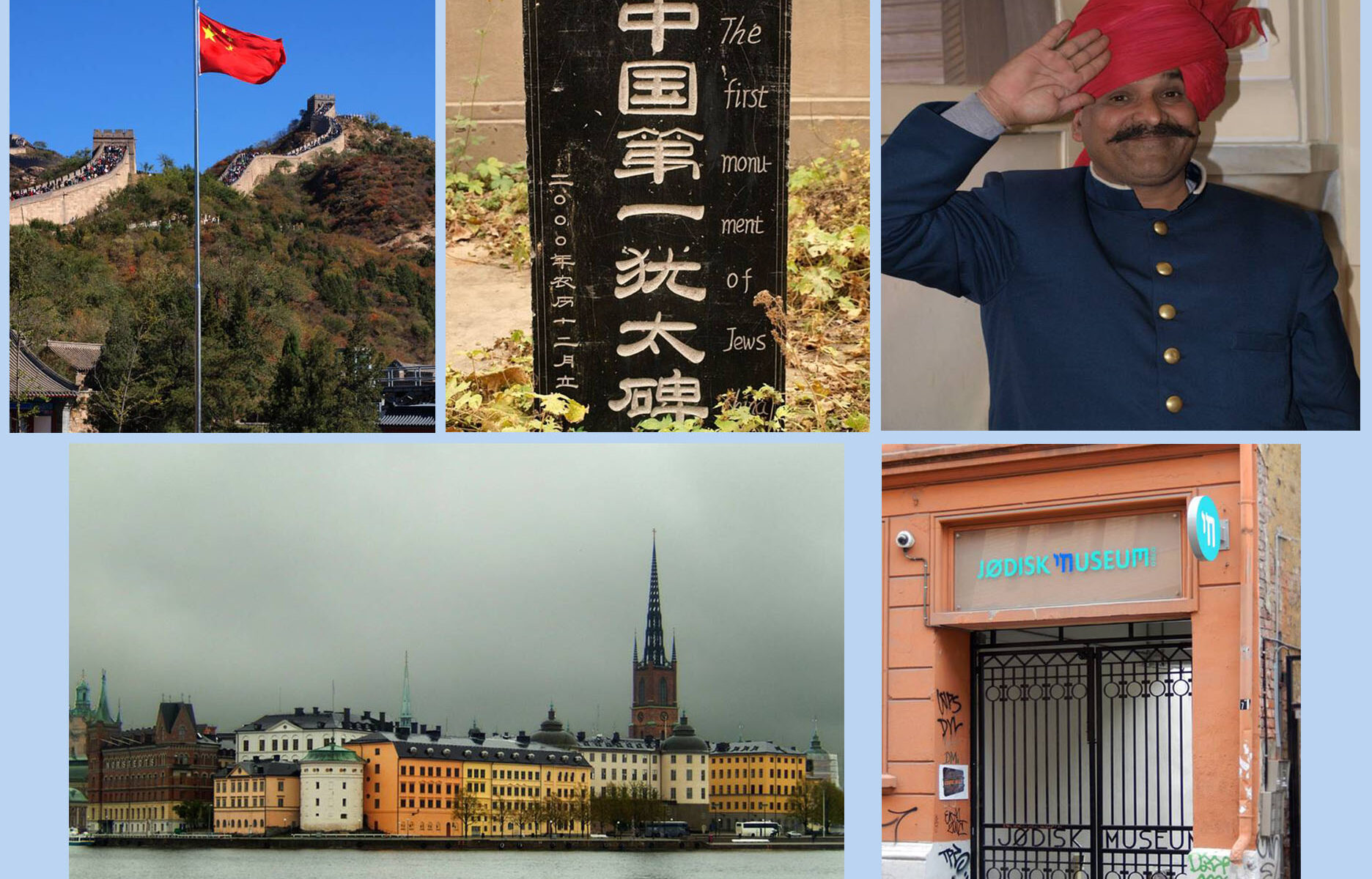
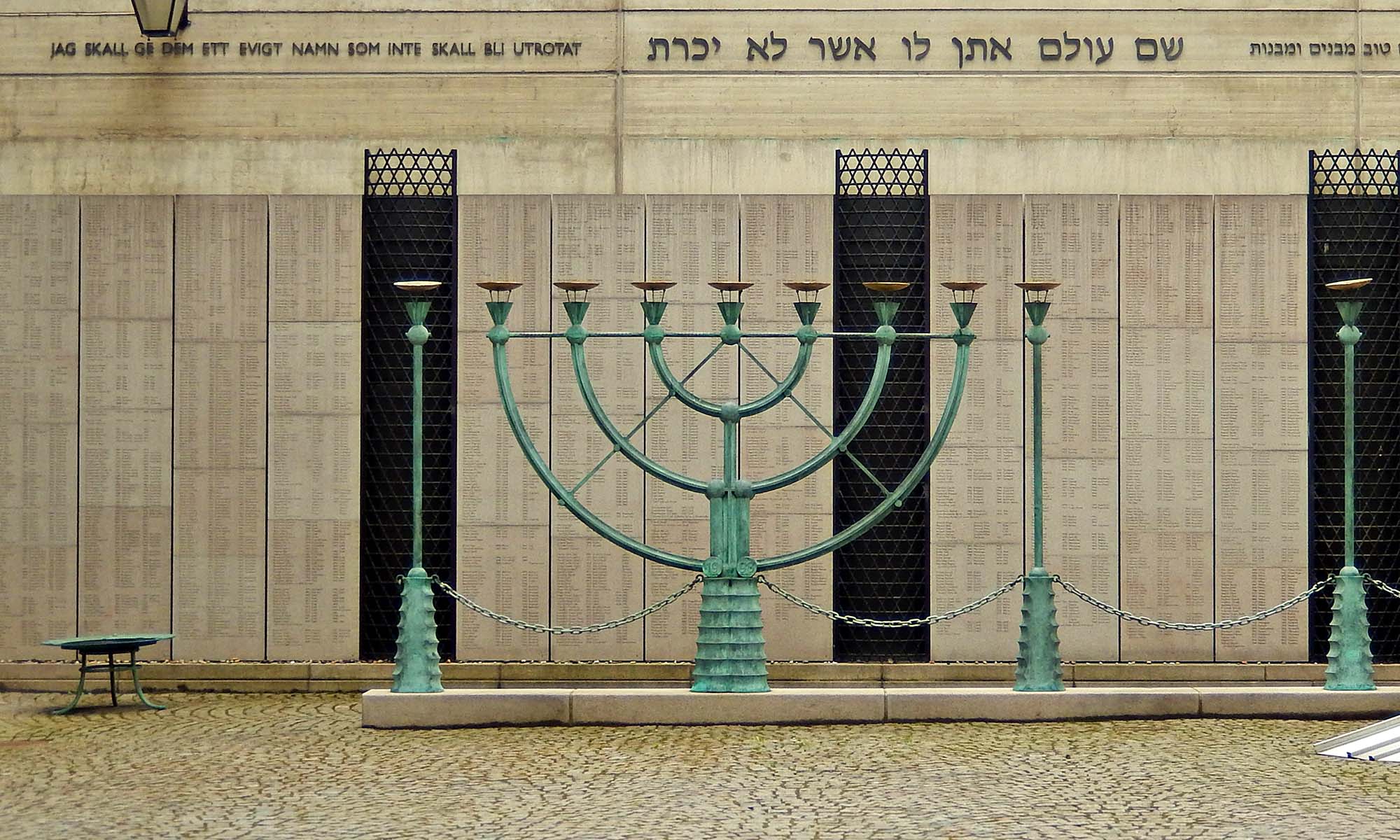
Title: Global Response to the Holocaust: From Europe to Asia—Norway, Sweden, China, India.” This lecture is virtual.

Sponsoring institution: Holocaust Resource Center of New Jersey. Kean University. Union Town.

Targeted audiences are the Holocaust studies teachers. However, the event is free and open to the public; anyone can register and attend.

To register, follow the link below to fill a simple Registration Form:

Link to Registration Form

———————–

2nd Lecture Date: October 21st  

Time: 6:30 PM CST

In person with a virtual option.

Title: “In Search of a Jewish Story in China. This lecture is in-person and virtual. Presented in connection with the Illinois Holocaust Museum’s current exhibit: Shanghai as a Safe Haven during the Holocaust.

Sponsoring institution is Illinois Holocaust Museum and Education Center, Chicago.

https://www.ilholocaustmuseum.org/events/in-search-of-a-jewish-story-in-china/

To register, click below and select “Virtual option.”

https://18161.blackbaudhosting.com/18161/tickets?tab=2&txobjid=8d226f05-f43c-4e9f-a903-57da06c242e8


The Best Chautauqua Bed and Breakfast – The Great Tree Inn

The Great Tree Inn.

Sometimes, wonderful things in life happen to us when we do not expect them. In June 2021, we decided to visit the Chautauqua Institution to attend several end-of-the-season concerts. At that time, it was almost impossible to find a bed and breakfast (B&B) or any other lodging inside the Institution’s territory. Most establishments were filled long before the season was even announced. The remaining ones often required a commitment to seven nights, but we needed only four.

Almost by chance, I stumbled (virtually) upon the Great Tree Inn. One excellent review after another began appearing on my computer screen, enthusiastically recommending this Inn to anyone attracted to wonderful outdoors offerings of Chautauqua County and environs: from the spectacular hiking in Panama Rocks to horseback riding, to Lake Erie wine tasting, or even snowmobiling.  “Great, but not for us,” I thought. I believed we have already paid our annual dues to Mother Nature after visiting the four national parks in California in May. The purpose of our first visit to Chautauqua was the Institution as a cultural and educational center. But then I talked to Mark and Sheila, the owners, and I knew that their Inn and B&B was the right place for us!

Seven years ago, Mark and Sheila, two medical researchers and world travelers, decided that they wanted a parallel career as hoteliers and bought a 170-year-old farm-turned-B&B. The Great Tree Inn and B&B is not your usual rural lodging. The Inn is named after its guardian, an ancient black locust tree. I was told that this giant is especially impressive in the spring when it produces clusters of fragrant white flowers. For a historian in me, that tree had almost a mythical meaning. I read many years ago about the black locust tree being often called a tree that “built America.” Black locust was considered the strongest timber in North America. In the early seventeenth century it was used in building the Jamestown settlement and in the nineteenth, was selected for strengthening the battleships that helped the United States to win in the War of 1812.

The Inn doubles as a farm, and you live there in a timeless environment surrounded by free-range chickens and ducks. Every morning you hear their “conversations.” The birds are often visited by two beautiful proud-looking goats and sturdy Belgian horses. “With so many chickens and ducks wandering around, aren’t you afraid of them being killed by foxes or coyotes?” we asked. “No,” Mark answered. “They have a guardian.” And he was not joking. The “guardian” happened to be the cutest miniature donkey. He kind of looked like Eeyore from the Winnie the Pooh stories. “Do not be fooled by his appearance,” said Mark. “When he feels threatened, and he does when the birds are attacked, he turns into a raging beast.” “Oy,” I thought.” I don’t want to be around when that happens.”  “But I do,” said my husband-photographer Alex.

Goat
Beautiful Mr. Goat observes us, intruders into his world.
Donkey
This cute Eeyore donkey will turn into a scary beast when he feels threatened.

The farm, or rather a romantic-looking 19th-century building, is in the center of a large green lawn surrounded by woods. The entire complex – with its giant tree, talkative chickens and ducks, cappuccino-colored horses, Eeyore turning into a fearsome warrior, sleeping cats, and a curious tiny dog watching us through the glass door – seems like a perfect refuge from the avalanche of our projects and deadlines. This was the world presided over by two marvelous hosts, Mark and Sheila: always attentive, sharp, intelligent, and sincerely interested in what their guests wanted to share whether about themselves or their experiences.

Irene Shaland, Mark, and Sheila
The author (right) with Mark (left) and Sheila (center).

Every day in this world began with an amazing breakfast cooked or rather created by Mark. Locally sourced and made with in-season fresh products, each dish looked like an art piece. We especially liked the typical English Yorkshire pudding (often called in this country a popover) served with a beef sauce. Another favorite was a duck-egg omelet roll with grilled zucchini and homemade crispy bacon inside it. If you are a vegetarian or a vegan, or have any other dietary requirements, Mark will accommodate your preferences. Forget about losing weight: Mark always has snacks and homemade pastries around the house.

Breakfast room at the Great Tree Inn.

The Inn offers seven comfortable rooms, tastefully furnished with antiques, each with its own theme. We loved ours: located on the ground floor and very private, it was called the “Seventh Heaven.” And it seemed it was, with red and green colors, a queen-size bed in an alcove, and a beautiful armoire.

Room #7
Our room was called the “Seventh Heaven.” 
Living room.
The living room also serves as a game room. 
Living room
Another view of the living room.
Reading room
The reading room.
Stairs to the secon floor of the inn.
Inside the Inn. The staircase to the second floor where six out of seven guest rooms are located. The open door on the left leads to our room.

Just five miles outside the Chautauqua Institution, the Great Tree Inn is perfect not only for hikers, swimmers, and snowmobile riders, but also for culture vultures like us!

The Great Tree Inn.
The Great Tree Inn, a historic farmhouse turned B&B. It is the best lodging in Chautauqua County, whether you came to enjoy the beautiful outdoors or to sample cultural programs at the Chautauqua Institution. 
paddle-wheeler steamboat
This paddle-wheeler steamboat replica takes visitors on historic tours of Chautauqua Lake. 
Alex Shaland
Alex: “Do we have time to go on a lake tour?”
Irene Shaland
Irene: “No time for the boat! We have a lecture to catch!”

chautauqua lake hotels, athenaeum hotel chautauqua, chautauqua ny hotels, chautauqua institution hotel, athenaeum chautauqua, hotels near chautauqua lake, chautauqua inn, chautauqua harbor hotel, lake chautauqua bed and breakfast, chautauqua bed and breakfast, chautauqua lake, lake chautauqua, best vacation spots in the us, bed and breakfast

Learn more about the author Irene Shaland.

Check out Irene Shaland’s Latest book “Shaland’s Jewish Travel Guide to Malta and Corsica.

Learn more about the photographer Alex Shaland.

Take a look at Alex Shaland’s adventure book “Suburbanites on Safari.

Visiting Chautauqua Institution

Bestor Plaza Fountain

Located by the beautiful Chautauqua Lake, Chautauqua Institution has been on our radar for decades. This 150-year old cultural organization in southwestern New York State is only a little over two hours from our home in Cleveland Ohio. However, for many years we have not managed to find a weekend for a visit. Finally, this year, when the international travel world became too stressful to navigate due to ever-changing Covid-related restrictions, we turned to domestic destinations. Attracted by the Chautauqua Institution’s superb performing arts and educational programming, we bought tickets for the last four concerts of the season.

Irene Shaland in Chautauqua Institution
Walking the red brick road inside the Chautauqua Institution.

Chautauqua Institution was envisioned by its founders Lewis Miller, a harvesting combine inventor, and Methodist Bishop John Vincent, as an educational and religious model of a promised land or a spiritual retreat for the faithful. It was initially called the Chautauqua Lake Sunday School Assembly. Today, with its resident symphony, opera, and drama theater, the Institution continues to strive toward achieving its initial goal of being a cultural, educational, and spiritual enclave. Inside the Institution, one can find a house of worship for not only every Christian denomination but also several other religions. We came across the Chabad House, and on Friday late afternoon, attended the most delightful Kabbalat Shabbat service of the Hebrew Congregation of Chautauqua, a reformed congregation formed there over thirty years ago.

Smith Wilkes Hall
Smith Wilkes Hall. The Hebrew Congregation of Chautauqua meets here in rainy weather.
Clock Tower on Lake Chautauqua
View of the Lake Chautauqua and the Intuition’s renowned Clock Tower. When the weather is good, the Hebrew Congregation celebrates Shabbat services here, right by the Lake. These services attract hundreds of people, both Jewish and non-Jewish alike.  

While in Chautauqua, one of our favorite pastimes was to meet people and talk to them. I am sure there were plenty of first-timers like us. But it just happened that everyone we met and talked to came to Chautauqua Institution almost every year. These were people who have been coming to Chautauqua during summer seasons for two or even three generations. They were staying there for no less than a week and attended lectures, numerous performing-arts offerings, and various classes (from writing poetry to sailing). Laughing, one young man told us that he did not remember a summer without Chautauqua: his mother was there when she was pregnant with him! We had an impression that most people knew each other and delighted in their world of culture and fellowship of minds.

One of our most favorite places to visit before our concerts was the historic Athenaeum Hotel with its wrap-around verandas and soaring columns. Called the “Grand Dame of the Chautauqua Institution,” the Athenaeum has been operating continuously since it was opened in 1881. This iconic structure was envisioned and financed by the Institution’s two initial founders. One of them, the inventor, Lewis Miller, was Thomas Edison’s father-in-law. Edison did some of the hotel’s early electric wiring and had his regular table at the restaurant, still called “the Edison’s Table.” I read that Edison used a nearby window right by his table to escape the autograph-seeking crowd!

Athenaeum Hotel
The historic Athenaeum Hotel, called the “Grand Dame of the Chautauqua Institution,” has been operating continuously since it was opened in 1881.

We delighted in every minute we spent in this timeless world, where every outsider can become an insider…if he or she paid $25 per person per day to get the gate pass!  And yes, with very few exceptions, no cars are allowed inside. The large parking lot is outside the Institution and costs only $10 per day. Shuttle buses are omnipresent and going continuously throughout the day taking people to various parts of the Institution and outside the main gate to the parking lot.

Chautauqua Institution amphitheater

We enjoyed every concert we attended, but our favorites were the first and the last: Brazilian Jazz and legendary Smokey Robinson. Most programs take place in the 5,000 seat amphitheater, so getting the tickets was not a challenge. However, finding a reasonably priced accommodation conveniently located inside the Institution—was. The majority of establishments require a week-long commitment, and most get filled long before the new season is announced and gate passes go on sale.

I was almost desperate: I had our tickets, daily gate passes, and pre-paid parking, but no place to stay! And then, purely by chance, we discovered the Great Tree Inn. Read about that wonderful B&B in our next article.

The Colonnade of Chautauqua Institution
The Colonnade of Chautauqua Institution houses art galleries, boutiques, and cafes.
Moses and the Ten Commandments
Moses and the Ten Commandments as another spiritual symbol for the Institution. 

Learn more about travel writer Irene Shaland.

Check out Irene Shaland’s latest book “Shaland’s Jewish Travel Guide to Malta and Corsica.”

India through the Jewish History Lens

Taj Mahal, India

Free Zoom Presentation:

The Art of Travel:  India through the Jewish History Lens – A Personal Journey

Hosted by: New City Library, NY

Date & Time: Wednesday, August 4, at 7:00 pm EST U.S.

Irene Shaland, a Jewish historian, came to see India as not just another country on her exploration list but as a place in space and time where one comes for self-discovery and personal growth. You have to know deep down why you are coming to India. If you do know why, you are bound to discover the most refined beauty and the deepest spirituality. Travelling through India, you will gradually learn – like peeling the onion, layer after layer – some very important truths about yourself and history, about people and myths they create. Something unexpected and wonderful might happen during this trip.

Hopefully, India, unique among the world civilizations with its seven thousand years of uninterrupted traditions, will forever become an integral part of your mental landscape. For Irene, a passionate Jewish history aficionado, India has changed her own understanding of Jewish identity. And this presentation will illustrate how and why this happened.

Join Irene on a virtual trip through layers of historic periods, artistic and architectural styles, and a multitude of cultural traditions and fascinating Indian Jewish stories of origin. This presentation, enriched by Alex Shaland’s photography, will transport you to Delhi, Varanasi, Khajuraho, Agra, Fatehpur Sikri, Jaipur, Udaipur, Aurangabad, Ellora and Ajanta caves, Cochin, and finally – Mumbai.

This event is free, but a reservation is required.  Please follow the link to the library website to register:

https://newcity.librarycalendar.com/events/india-through-jewish-history-lens

Phone: (845)-634-4997 ext. 139

Meet the presenter Irene Shaland.

Take a look at the schedule of our events: Schedule of Events.

Chumash Indians and their Painted Cave

Painting inside Chumash Cave

Seeking the Chumash Story

Learning the history of the land and past and present of the people has always been an important part of all our trips. While in Santa Barbara, we wanted to learn more about the Native American nation of Chumash. That tribe used to inhabit the central and southern coasts of California from Morro Bay in the north to Malibu in the south. Today, this land is part of the counties of San Luis Obispo, Santa Barbara, Ventura, and Los Angeles. The Historical Museum of Santa Barbara could have been a great resource for us, but it was closed due to the pandemic.

Santa Barbara Historical Museum
Santa Barbara Historical Museum.

So, we decided to visit the Old Mission that was specifically established in 1786 to Christianize the Chumash. It was there that the native people used to live, study, pray, work, and die. While exploring the mission, we walked along the paths of the church cemetery admiring the elegant and elaborate mausoleums of important citizens of the town. The indigenous people of the land were buried there as well, but were soon forgotten. It is worth mentioning that some of them were the stonemasons who built the Mission and the artists who painted the church walls.

Old Spanish Mission, Santa Barbara
Old Spanish Mission, Santa Barbara.
Interior of the Old Spanish Mission Church in Santa barbara, California
Interior of the Old Spanish Mission Church.
The Old Spanish Mission cemetery.
The Old Spanish Mission cemetery. 

Finding the grave of the Lone Woman of San Nicolas Island

In the corner, near the bell tower, we found one grave that attracted our attention. The plaque said that Juana Maria was buried there in 1853. Here she was: The Lone Woman of San Nicolas Island made famous by Scott O’Dell’s popular novel Island of the Blue Dolphins (1960). San Nicolas Island is one of the eight offshore islands near Ventura called the Channel Islands.

Juana Maria’s grave
Juana Maria’s grave in the corner of the Old Spanish Mission courtyard. 

When the native people of that island were forced to move from the island to the mainland, an orphan girl was inadvertently left behind. She survived alone for many years until she was “discovered” in 1853 and brought to the Santa Barbara Mission. The young woman was baptized as Juana Maria but died after only a few weeks there, probably from a disease her body had no immunity against.

Enigmatic cave rock art

However, unmarked graves are not the only reminders of the Chumash people once plentiful in this land. They left behind their enigmatic cave rock art. We drove 25 miles from Santa Barbara via a narrow, winding, and vertigo-inducing road to visit one of those caves in Chumash Painted Cave State Historic Park. After reaching the State Park sign, we left the car and followed a steep path to a small cave with the entrance barred by a heavy iron grillwork.

The entrance to the Chumash Painted Cave Historic State Park.

We had to stand in front of the grillwork for a while letting our eyes adjust to the dark cave, then peered inside and saw the amazingly bright paintings. Anthropologists believe that the paintings date to the pre-contact period (before the Europeans showed up), somewhere in the 1600s. Some sources also state that the paintings potentially could be as old as thousands of years. So, knowing that, we were astonished to find the colors so bright and vivid.

Painting on the wall of the Chumash Painted Cave
Looking inside the cave through the grillwork of the closed gate.

The bright colors of the mysterious spiritual images

The bright black, white, red, and yellow paints used by the unknown ancient artists were made of charcoal or manganese (black), crumbled sedimentary rock (white), hematite (red), and limonite (yellow).

Painting inside Chumash cave.
Group of paintings on the left.

Alex and I are not complete novices when it comes to the prehistoric/pre-contact shamanistic cultures. For example, we have studied, photographed, published, and lectured on the prehistoric rock art in the Cederberg Mountains in South Africa. But the images inside the Chumash cave did not look like anything we saw before. These images seemed to be involved in some mysterious dance, overlapping each other. Were these paintings multiple, overlapping layers done by different artists at different times? Or were we looking at an intentional mystical configuration? Some of the shapes were circular, some anthropomorphic.

The meaning of images is not known for sure

Strangely, some of these images reminded me of a Maltese cross, others, of a Rota Fortunae (a medieval symbol of the capricious nature of fate). But of course, they were nothing of the sort. Possibly, the paintings could be connected to the Chumash understanding of astrology or cosmology. Or they could have been created to link those in the world of the living with the world of their ancestors, the realm of the spirits. Sadly, the truth is that nothing is known for sure, and the images’ meaning is lost even to the descendants of the Chumash people.

Art should increase the “energy of spirit”

Driving back along the twisting and curving road again, I sat in the back of our rental car.  I could not force myself to look right at the vertical granite wall of the mountain, or to look left down the abyss far below. So, I closed my eyes and thought of what Kenneth Clark, a prominent art historian, said: “Art…should do something more than give a pleasure. It should increase our energy of spirit.” The paintings in that cave were the Chumash’s spiritual practice. And they have become our mystery – to ponder upon and to meditate. In our culture that is worldly and cerebral, we need to see the art that defies our intellectual understanding but offers instead a gateway to new spiritual insights.

santa barbara things to do, things to do in santa barbara, santa barbara california, santa barbara mission, chumash tribe, chumash people

Learn more about the the author, Irene Shaland.

Learn more about the photographer, Alex Shaland.

Enjoy more Alex’s photos from around the world on Instagram.